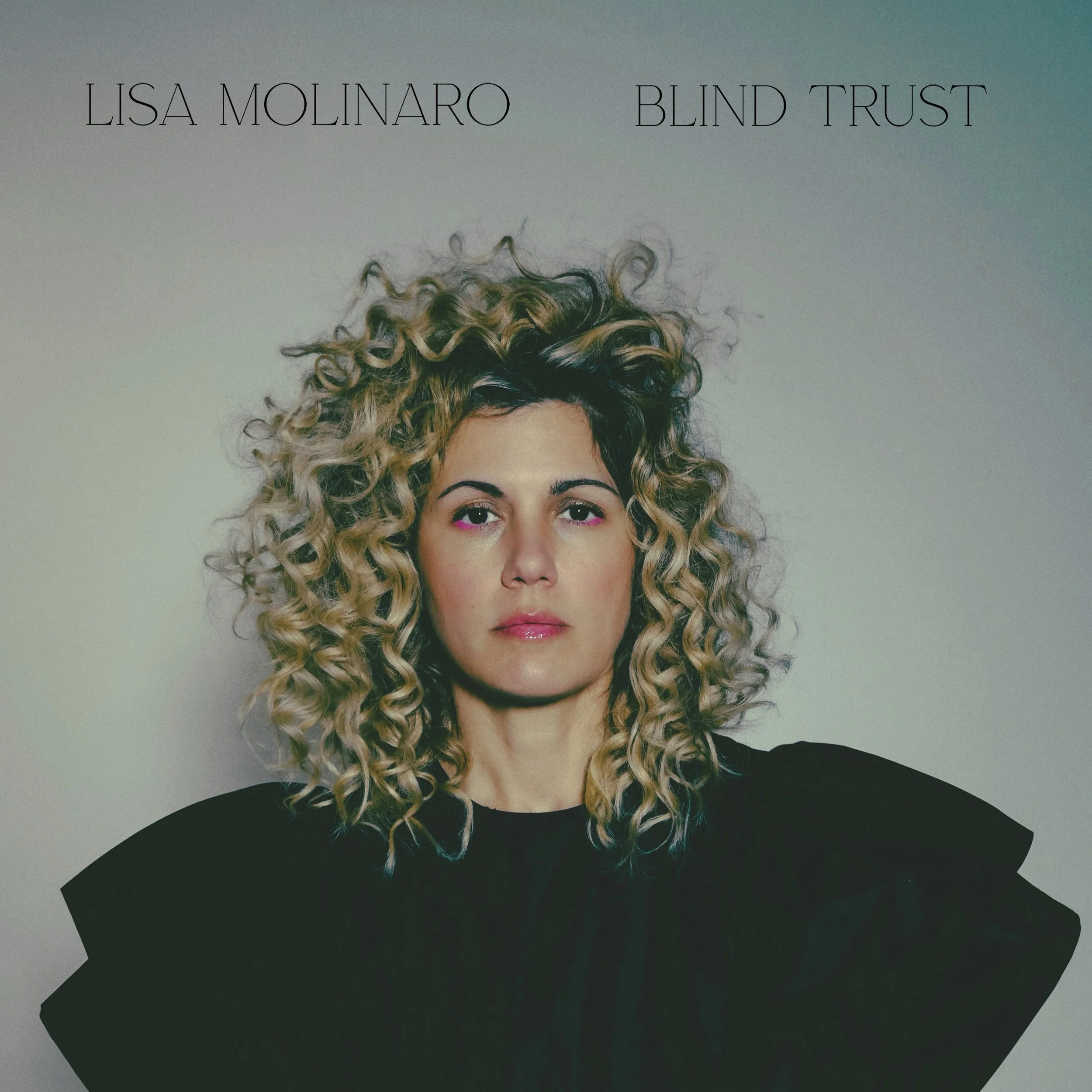
NEW ALBUM
BLIND TRUST
OUT NOW
NEW MUSIC FROM ‘BLIND TRUST’

“I go wholly/Ever slow”: five words sum up Lisa Molinaro and her restless, intricate debut solo record, Blind Trust. Lisa Molinaro was in the background of the biggest indie acts of the last few decades – recording with Modest Mouse, on stage with the National, touring with the Decemberists – playing viola. When the pandemic hit, Molinaro had an identity crisis: who was she when she wasn’t lending gravitas to others? She’d considered solo projects before, recording into her Tascam as a twenty-something; before, she’d cited external circumstances, but a collaboration with a dance company led her to work on her own project. Years later, we have her debut album.
There are elements of the bands she once backed on Blind Trust; it sounds a little like all of those bands and also like none of them. These are eight densely packed songs, rarely exceeding four minutes but epic in scale all the same. With its urgent hi-hats and hushed vocal harmonies, opener “Not So Secret Codes” packs a thriller’s worth of tension into the length of an average pop song. (Not coincidentally, Molinaro recently worked on her first feature score, for the comedy Raging Midlife.)
Trust’s lead single, “We All Get Stuck”, put col legno strings (tapping the viola with the wood of her bow) atop a chugging motorik beat from Dustin Dybvig, before layering more and more countermelodies as the song grows overwhelming. It’s fittingly the moment Molinaro realized she was onto something entirely her own: “You might never get that call/that you believe explains it all.” Just when you get a handle on the album’s grandiose, layered sound, it will throw a curveball like “Peach Fuzz”, a 90s grunge homage which Molinaro playfully calls “Buffalo Tom meets Sugar meets Lisa.”
Beneath the meticulous craftsmanship of Molinaro’s self-production, Blind Trust is rooted in the most universal emotions – not love songs or grief songs, but songs about the experience of love and songs about the experience of grief. On the soft-rock “The Apparition” an old fragment polished up for the record, Molinaro uses abstract but tactile imagery to convey a narrative of a collapsing relationship: “Run the water between my hands/Run the water onto sand.” On the creeping “The Ending Never Stops”, she writes about accepting mortality, personifying Death as “the navigator/the butler, maid and patient waiter”. Inspired by losing loved ones to freak accidents and terminal illnesses, it’s the record’s most dissonant song until the chorus promises to hold on, as “there’s always a chance to see the sun.”
Mixed by Zach Bloomstein (Searows, Portugal. The Man) and mastered by Amy Dragon (Bartees Strange, Cleo Reed), Blind Trust integrates everything she’s learned through decades of touring and makes something no one else could make. Molinaro is the first to describe herself as a late bloomer; she named her home studio after that. But she’s here now, and wherever Molinaro goes on Blind Trust, she goes wholly.